






In this article
Vintage watch prices can look all over the place. You’ll see two watches that appear similar in photos, and one is $2,500 while the other is $12,500. That’s not always hype. It’s usually the details, and it’s what separates a smart buyer from an expensive lesson.
This guide explains what really moves the number, what matters less than people think, and how to compare prices without getting fooled. It’s a comprehensive guide you can use to find the value signals that actually hold up.
If you want to browse current inventory while you read, start here: vintage watches.
The real answer to “how much are vintage watches?” and what they’re worth
The real answer is: it depends, and it depends for predictable reasons. What matters is what the watch is worth in its current condition, not what the seller hopes it’s worth.
Here are practical ranges to set expectations. These aren’t promises. They’re the buckets most buyers end up shopping in.
Budget range
Often entry level pieces, simpler models, more common references, or watches with visible wear and tear and unknown service history.
Mid range
The sweet spot for many buyers. Strong everyday wristwatch options with better condition, cleaner originality, and more confidence around what you’re getting.
Collector range
This is where you start paying for specifics. A sharp case, an honest dial, a correct bracelet, a desirable configuration, or a stronger brand pull can push prices up quickly. This is also where many vintage watch collectors spend most of their time.
Investment level
This is usually rare references, special dials, scarce configurations, or top condition examples with complete documentation. Prices in this range are driven by market demand in the watch market and the vintage market, not just by what a watch “should” cost.
Why there is no single price
- condition varies more than photos show
- originality varies more than sellers admit
- rarity is often misunderstood
- demand changes by brand, model, and even dial type
- service history can add confidence or add risk
Quick note: the same model can vary widely
Even within one reference, small changes matter. A replaced dial or polished case can drop the watch worth. A rare dial variation or strong provenance can raise the value of a vintage watch.
The 5 biggest factors that change vintage watch prices fast
Condition: case shape, dial health, bracelet stretch
Condition is the first big price mover because it’s the hardest to reverse.
Case shape matters. A sharp case with original lines usually costs more than a case that has been heavily polished over time.
Dial health matters. Moisture damage, heavy spotting, or a refinished dial can change pricing fast.
Bracelet stretch matters on many watches. A loose bracelet can be expensive to address, and buyers price that in.
If you want to assess the condition quickly, focus on the dial first, then the case shape, then the bracelet.
Originality: dial, hands, bezel, crown, parts swaps
Originality is where many deals look good until you zoom in.
The parts that get swapped most often:
- dial
- hands
- bezel
- crown
- bracelet
- even movement parts during servicing
Not every replacement is bad. Service parts are normal, and a manufacturer service can include updates. The key is that changes are disclosed, match the era, and make sense. Undisclosed swaps and missing original parts are where value drops.
Rarity and reference: production numbers, configurations, special dials
Rarity is real, but it has to be specific.
A watch isn’t rare because someone says it is. It’s rare because:
- production was low
- a configuration was uncommon
- a dial variant is hard to find
- the reference was short lived
- few examples survived in original condition
This is where details like the reference number matter. Two watches can share a name and still live in totally different price brackets.
Service history: documented service vs unknown future costs
Vintage watch cost is not just the purchase price. It’s purchase price plus the unknown.
A documented service history can support pricing because it reduces buyer risk. It tells you the watch has been maintained and that someone cared enough to do it right.
An unknown service history can lower pricing because the next service might be soon, and it might not be cheap. That “hidden cost” is one of the main reasons prices for watches can look confusing online.
Completeness: box and papers, matching items, provenance
Box and papers can move pricing, especially on certain brands and more modern vintage.
Completeness can include:
- original box
- warranty papers or certificate
- manuals and tags
- purchase receipts
- service documentation
- known ownership history
Provenance doesn’t have to be famous to matter. Even simple history can increase buyer confidence.
Brand and model demand: why some vintage watches cost more
Some vintage watches price higher for one main reason: demand, especially in the luxury watch space.
Demand cycles are real. Models trend up and down based on:
- collector interest
- auction results and recent sales
- pop culture moments
- broader shifts in the watch world
Brand perception matters too. Some brands carry a built in premium because buyers trust the name, the design language, and long term market value. That’s part of why the word luxury shows up so often in pricing conversations.
A few examples you’ll see often:
- vintage Rolex watches tend to price higher because the market is deep and demand stays strong.
- vintage Omega watches can offer strong value because there are many great references across eras, and buyers can still find relative bargains.
- vintage Cartier watches are often driven by design, case shape, and originality, especially when the details are right.
You’ll see similar demand effects with other high end names like Audemars Piguet and Vacheron. And yes, Patek and Patek Philippe can command premiums where rarity and originality line up.
What does not change the price as much as people think
A lot of buyers assume the wrong things move price. Here are a few that matter less than you’d think.
Age alone
Older doesn’t automatically mean more valuable. Some watches were made in huge numbers. Others were made poorly. Some are great, but age by itself is not a premium.
Claims like “rare” without proof
If the listing can’t explain why it’s rare, treat it as marketing.
Light cosmetic wear on a watch meant to be worn
A vintage timepiece is a wearable object. Honest wear is normal. Some wear matters, but not every scratch should change the number.
Seller hype and vague investment talk
If the pitch is all emotion and no facts, be careful. The value of your watch should be supported by specifics you can verify.
The hidden cost: what you may pay after you buy
This is the part most buyers ignore until they own the watch.
Routine service expectations
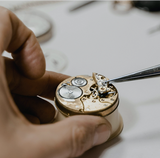
Mechanical watches need servicing. If a watch hasn’t been serviced recently, assume you may need to do it after purchase.
Parts availability and brand specific costs
Some models are simple. Some are complicated. Some brands have easier parts access, depending on the manufacturer and the era. That changes servicing cost and timeline.
Water resistance assumptions
Many vintage watches are not meant for water anymore, even if the dial says otherwise. Testing, gaskets, crowns, and case condition all matter. Assuming a vintage piece is water safe is one of the fastest ways to make a purchase expensive.
When a watch appraisal makes sense for insurance
If you’re insuring a higher value piece, documentation matters. That’s when a watch appraisal can help determine the value and establish coverage that matches the current value.
How to compare prices without getting fooled: reference number, serial numbers, and real proof
If you want to compare a sales price intelligently, compare like for like and make the dealer show their work. Your goal is to evaluate the listing, not the headline.
Compare:
- the reference number
- serial numbers when available and appropriate to share
- dial type and dial condition
- bracelet type and bracelet condition
- originality disclosures and authenticity signals
- case shape and polishing
- service history documentation
- completeness: box and papers
Spot price gaps and ask why
A price gap usually comes from one of the five factors. If it doesn’t, that’s a red flag.
Where buyers get misled
Many people estimate value by scanning marketplace listings without checking the details. Sites like Chrono24 can be useful for seeing ranges, but you still have to assess the condition, originality, and completeness to understand what the number means. The same goes for eBay, where condition and disclosure vary wildly across sellers.
What to ask a dealer to justify the number
- What’s original on this watch and what has been replaced
- Are the original parts still present if anything was swapped
- Is the dial original
- Has the case been polished
- When was it last serviced and do you have documentation
- What comes with it: box, papers, receipts, extra links
- What is your return policy
How to shop online safely
- require clear, high resolution photos (dial, case, caseback, movement when possible)
- require a written description of originality and condition
- buy from online retailers or dealers with transparent return policies
- avoid listings that hide details behind vague language
If you want to go deeper, a good watch forum can help you learn what details matter for your model before you buy.
A simple pricing checklist you can use while shopping
Think of this as your quick price guide. Use it to gauge whether a number makes sense.
If these are true, expect the price to be higher
- sharp case with honest lines and minimal over polishing
- clean dial with healthy printing and consistent aging
- correct hands, bezel, crown, and period matching parts
- documented service history
- box and papers or strong provenance
- desirable configuration or special dial
If these are true, the price should be lower
- heavy polishing that softened the case
- refinished dial or undisclosed dial work
- mismatched parts or vague originality claims
- unknown service history
- poor photos or missing details
- weak return policy
If you’re buying as an accessory you’ll wear often, prioritize condition, service history, and comfort over hype. If you’re buying as an heirloom, prioritize documentation and stability over trend.
If you want to see current options across price points, start with our collection of vintage watches.
Frequently asked questions
Why are vintage watch prices so different for the same model?
Because the “same model” often isn’t the same in practice. Condition, originality, service history, and completeness can change pricing quickly, even within the same reference. Those factors influence the value and explain why two listings can look similar but price far apart.
Are vintage watches expensive compared to modern watches?
Some are, especially rare or top condition examples. But many vintage timepieces offer strong value compared to modern watches because you can often get character, design, and quality at a fraction of the price.
Do box and papers increase the price of a vintage watch?
Sometimes. They can increase confidence and help support a premium, especially for certain brands and more modern vintage. For older pieces, condition and originality may matter more.
How much should I budget for servicing a vintage watch?
It depends on the type of watch, complexity, and parts availability. If service history is unknown, it’s smart to budget for service or repair so the watch runs correctly and you avoid surprise costs later.
What is the safest way to price compare vintage watches online?
Compare like for like and demand transparency. Match the reference number, details, condition, originality, and service history. Ask questions, require good photos, and stick to sellers with clear return policies.